
Burn-in test electronics processes help manufacturers identify early failures, evaluate product stability, and improve quality. With suitable testing equipment, businesses can verify performance before electronic products reach customers.
1. What Is Burn-In Testing for Electronics?
Burn-in test electronics procedures involve operating electronic products under controlled conditions for a specified period. During this process, equipment applies electrical loads and monitors product performance under selected temperature and operating conditions. This approach helps reveal potential weaknesses, unstable components, and thermal problems that may not appear during short functional tests. For power supply manufacturers, burn-in test electronics equipment is an important part of reliability verification.
2. Why Is Burn-In Testing Important?
Reliable burn-in test electronics processes help manufacturers identify early product failures before shipment. Continuous operation allows engineers to observe changes in output voltage, current, temperature, and other performance indicators. Detecting problems during production can reduce the risk of defective products reaching customers. It also provides useful information for improving product designs, component selection, and manufacturing procedures.
3. Key Functions of Testing Equipment
When selecting burn-in test electronics equipment, manufacturers should consider the electrical characteristics and testing requirements of their products. Common evaluation items include load regulation, output ripple, conversion efficiency, and temperature stability. Some integrated production systems also include power-up checks, high-voltage withstand testing, and final functional inspection. These functions provide a more complete assessment of electronic product performance.
4. Energy-Saving Burn-In Technology
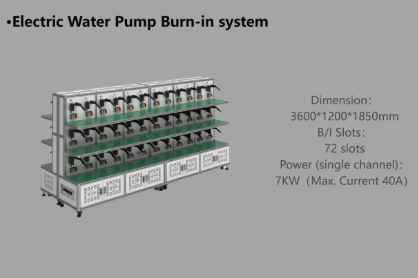
Traditional burn-in test electronics systems often use resistive or conventional electronic loads that convert electrical energy into heat. Regenerative electronic loads offer another approach by converting absorbed energy back into AC power for reuse within the facility. This can reduce energy waste and the heat generated during long-duration testing. JETTEST provides energy-saving burn-in systems for applications involving communication power supplies, chargers, and server power supplies.
5. Automation in Electronic Manufacturing
Automated burn-in test electronics solutions help manufacturers manage high-volume production more consistently. A configured production line can integrate barcode identification, electrical testing, burn-in, high-voltage testing, final inspection, and product sorting. This connected workflow reduces manual handling and helps organize testing procedures. JETTEST offers fully automatic test and burn-in lines designed around different power supply products and production requirements.
6. How to Select the Right Equipment
Choosing suitable burn-in test electronics equipment requires a clear understanding of product specifications, rated power, input voltage, load conditions, temperature range, and test duration. Manufacturers should also review safety functions, monitoring capabilities, and production capacity. JETTEST systems can include leakage protection, over-temperature protection, smoke detection, fault alarms, and emergency shutdown, depending on the selected configuration.
Conclusion
Effective burn-in test electronics procedures support product reliability, manufacturing quality, and production efficiency. By choosing equipment that matches specific testing requirements, manufacturers can establish a more consistent verification process. JETTEST provides power supply aging systems and automated testing solutions for different electronic manufacturing applications.